Quick answer. You collect truck wash reviews by asking automatically, within a few hours of a finished wash, and by asking the person who booked it rather than the driver who brought the vehicle. The request should name one specific thing, usually turnaround time, and link straight to your Google Business Profile. Most washes never ask at all, which is why their listing looks abandoned.
A fleet manager choosing between two truck washes on the same industrial estate has almost nothing to go on. Both have a website. Both promise fast service. What decides it, in the ninety seconds that decision actually takes, is what other hauliers said about the place.
Why do reviews matter for a truck wash?
Reviews matter because a truck wash is a repeat purchase bought on trust. A fleet manager is not deciding where to spend fifty euros once. He is deciding who washes forty vehicles a month for the next two years, and a bad choice means drivers queuing while their driving hours run down. Under EU tachograph rules those hours are a hard limit, not a preference, so a wash that runs behind costs the haulier real money on the same day.
That is a high-stakes decision made with almost no information. Your opening hours and your prices say nothing about whether you run on schedule. Another haulier writing “we send eight a week and we have never sat waiting” says everything.
There is a second effect. Review count and recency both feed into which businesses appear in the Google local pack at all, so a listing with four ratings from 2023 is not merely less persuasive than one with forty from this year. Often it is not on the same screen.
When should you ask for the review?
Ask within a few hours of the wash being marked complete, while the driver is still on site or has just pulled out. Wait until Friday afternoon and you are asking someone to rate a visit they have stopped thinking about.
This is where most truck washes lose the review, and it is a timing problem rather than a service problem. The work was fine. Nobody asked while it still mattered.
Two details change the outcome more than the wording does:
- Ask whoever booked, not whoever drove. Drivers are contracted as often as employed, and they have no stake in your relationship with that fleet. The planner who chose you does.
- Ask after an ordinary wash, not a memorable one. Requests sent after you have fixed a complaint produce reviews about the complaint.
What exactly should you ask?
Ask one specific question instead of requesting general feedback. “How did we do?” produces “fine”. A question with an edge on it produces a sentence a stranger can use.
The difference is not subtle:
| What you ask | What you get back |
|---|---|
| Leave us a review | “Good service, friendly staff” |
| How was the quality? | “Trucks came out clean” |
| Were you back on the road on time today? | “In and out in 25 minutes, no queue at 6am” |
The third one names the thing fleet customers actually worry about. Whoever answers it writes about turnaround, and turnaround is what the next fleet manager scans for. Ask about quality and you get adjectives. Ask about time and you get numbers.
Keep the request to two sentences and one link. Every extra step costs you replies, and a request that reads like a form gets treated like one.
Which platform should you put your effort into?
Put nearly all of it into your Google Business Profile. For a business that people find by searching “truck wash near me” on a phone, that is the listing that decides whether you appear and whether you get the call.
Trustpilot and industry directories have their place, and they are worth claiming so nobody else does, but splitting a small stream of reviews across four platforms leaves you looking thin on all four. Pick one, get to a number that reads as active, then widen.
One exception worth making: if a large fleet client runs a formal supplier review, ask them to put the same words on your public listing. They have already written it. The second ask is a small one.
How do you automate this without becoming a nuisance?
Automate it by tying the request to a completed job rather than to a calendar, and by skipping anyone you contacted recently. You need both. Without the first you are back to remembering. Without the second you email a fleet that visits three times a week three times a week.
A setup that works:
- The wash is marked complete in the system.
- An email goes to the contact who booked, not to the driver.
- Anyone contacted in the last sixty days is skipped automatically.
- Replies land on the customer record, so you can see which accounts are quietly unhappy before they leave.
Operators underrate that last point. The value is not only in the public rating. It is in knowing that a fleet which used to send twelve trucks a week now sends four, and that the last thing they told you was about waiting time. That is the same signal that shows up in fleet client retention, arriving earlier and in plain language.
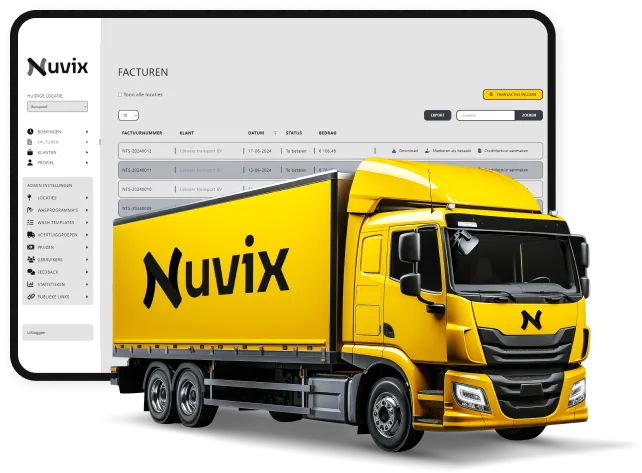
Nuvix handles this through its reviews and emails features, which fire on a completed wash rather than on a schedule, so the request arrives while the visit is still fresh. Replies attach to the account alongside its company and fleet records.
What do you do about a bad review?
Answer it in public, quickly, and without arguing. A calm reply that names what went wrong and what has changed gets read by everyone who arrives later, and that does more for you than the review does against you.
What you do not do is explain why the customer was mistaken. Even when you are right, your audience is not the reviewer. It is the fleet manager reading along six months from now, working out what you are like when something goes wrong.
A wash with nothing but five stars reads as suspicious anyway. A few fours with sensible replies underneath look like a real business.
Questions we get asked
How many reviews does a truck wash need?
Enough to look current, not enough to hit a number. A steady trickle beats a spike: twenty spread across the year reads better than sixty in one month and nothing after. Recency is the first thing a reader checks, and it is the thing you control by asking every week instead of once a quarter.
Can you ask for a bad review to be removed?
You can ask, and it rarely works. Google removes reviews that break its policies, not reviews you disagree with. Reply in public instead. Offering anything in exchange for posting or pulling a review breaches Google’s terms and puts your whole listing at risk.
Should you offer a discount for a review?
No. Google prohibits incentivised reviews outright, and in a business setting you also put your contact in an awkward position with their own employer. A discount buys you a review that reads like a bought review, which persuades nobody.
Who should reply to reviews?
One named person, consistently. Replies signed by a real employee read completely differently from replies signed by a company, and consistency matters more than speed. Pick whoever already talks to fleet customers.
What if a driver leaves the review instead of the planner?
Take it. A driver review about queue length is still about turnaround, which is the thing that sells. Just do not build your process around drivers, because they change employer often and they are not the person renewing the account.
Want to see what automatic follow-up looks like against a real wash schedule? Start a free trial and send the first request this week.